

Table of Contents
Introduction
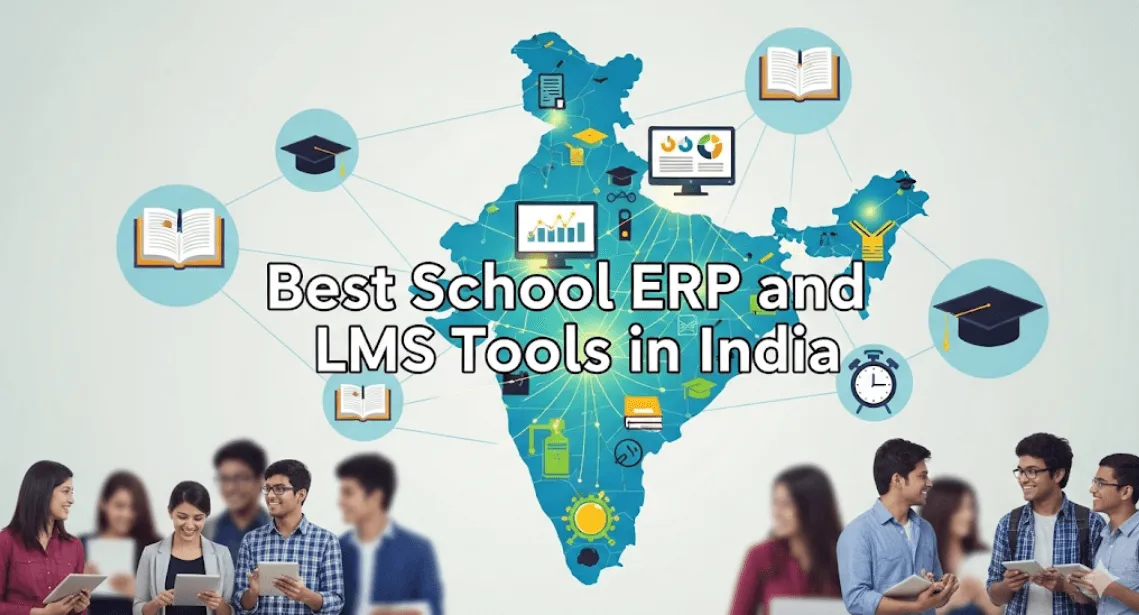
As schools across India adapt to NEP 2020 and parent expectations, digital infrastructure has become essential. From admissions to attendance, fee collection to virtual classrooms, the right technology makes all the difference. That’s where school ERP & LMS tools in India play a transformative role.
In this 2025 edition, we review the top solutions, their features, and how they can help schools streamline operations, enhance parent trust, and improve learning outcomes.
Why schools need ERP and LMS tools in 2025
- Centralised operations: Manage admissions, fees, attendance, and reports in one place.
- Parent communication: Keep parents informed with instant updates.
- Hybrid learning support: LMS tools enable digital classrooms and assessments.
- Compliance readiness: Meet NEP 2020 digital and reporting standards.
- Competitive edge: Build reputation with modern, transparent systems.
Key features to look for in school ERP & LMS tools
ERP Features
- Online admissions and enquiry tracking
- Fee collection and automated reminders
- Attendance (biometric, RFID, app-based)
- Timetable and scheduling
- Reports and compliance tools
LMS Features
- Virtual classrooms (live and recorded)
- Online assessments and grading
- Digital content library
- Parent and student dashboards
- Integration with ERP for seamless data flow
Top School ERP & LMS Tools in India (2025 Edition)
1. Entab CampusCare
- Overview: One of India’s most popular ERP platforms.
- Key strengths: Admissions, fee management, communication, integrated mobile app.
- Best for: Large private schools needing comprehensive solutions.
2. Fedena
- Overview: Open-source ERP with global presence.
- Key strengths: Flexible, modular, affordable for mid-size schools.
- Best for: Schools looking for scalability and customisation.
3. Teachmint
- Overview: Mobile-first LMS with ERP functionalities.
- Key strengths: Virtual classrooms, live classes, fee collection, parent communication.
- Best for: Schools prioritising hybrid learning.
4. Classpro
- Overview: Initially designed for coaching centres, now adopted by schools.
- Key strengths: Fee automation, student management, digital communication.
- Best for: Budget-conscious schools and small institutions.
5. MyClassCampus
- Overview: Complete ERP + LMS with mobile-first approach.
- Key strengths: Fee collection, exams, transport, parent app.
- Best for: Schools looking for all-in-one digital backbone.
6. Edunext
- Overview: Cloud-based ERP solution tailored for schools in India.
- Key strengths: Admissions automation, fee management, smart dashboards.
- Best for: Schools in Tier I and Tier II cities focusing on growth.
7. Moodle (with ERP integrations)
- Overview: Leading global LMS, customisable and widely supported.
- Key strengths: Content delivery, assessments, hybrid learning.
- Best for: Schools seeking advanced LMS with integration flexibility.
Comparison Table: Top ERP & LMS Tools in India (2025)
| Tool | Type | Key Features | Best For |
|---|---|---|---|
| Entab CampusCare | ERP | Admissions, fees, mobile app | Large private schools |
| Fedena | ERP | Modular, customisable, affordable | Mid-size schools |
| Teachmint | ERP+LMS | Live classes, fees, parent communication | Hybrid learning schools |
| Classpro | ERP | Fee automation, student management | Budget-conscious schools |
| MyClassCampus | ERP+LMS | Exams, transport, parent app | All-in-one solution seekers |
| Edunext | ERP | Admissions, dashboards, cloud-based | Growth-focused institutions |
| Moodle | LMS | Content, assessments, integrations | Advanced LMS users |
Benefits of adopting school ERP & LMS tools in India
- Saves time and reduces paperwork
- Enhances transparency for parents
- Improves teacher efficiency
- Supports student learning outcomes
- Provides data for better decision-making
Implementation roadmap
- Audit your school’s needs: Identify pain points like fee collection or hybrid learning.
- Select the right tool: Choose ERP, LMS, or a hybrid based on your priorities.
- Train staff and parents: Smooth onboarding ensures adoption.
- Integrate systems: Ensure ERP and LMS tools share data.
- Track KPIs: Measure ROI via time saved, parent satisfaction, and reduced errors.
FAQs
Which is the best school ERP & LMS tool in India?
It depends on your needs. For all-in-one, Entab or MyClassCampus. For LMS-first, Teachmint or Moodle.
Are ERP and LMS tools affordable for small schools?
Yes. Tools like Classpro and Fedena offer cost-effective plans.
How do ERP and LMS tools support NEP 2020 compliance?
They streamline reporting, hybrid learning, and digital assessments.
Can ERP and LMS tools integrate with each other?
Many modern solutions provide APIs and integrations for seamless data flow.
How fast can a school implement ERP or LMS?
Basic features can go live in 2–4 weeks with proper training.
Conclusion
Adopting school ERP & LMS tools in India is no longer optional in 2025. From saving time to boosting admissions and parent trust, the right solution transforms a school’s operations and reputation. Evaluate tools based on your size, goals, and budget, and invest in a digital backbone that grows with your institution.
LegacyEdTech helps schools choose and implement the right ERP and LMS solutions. Book your free consultation today to see which platform fits your school best.